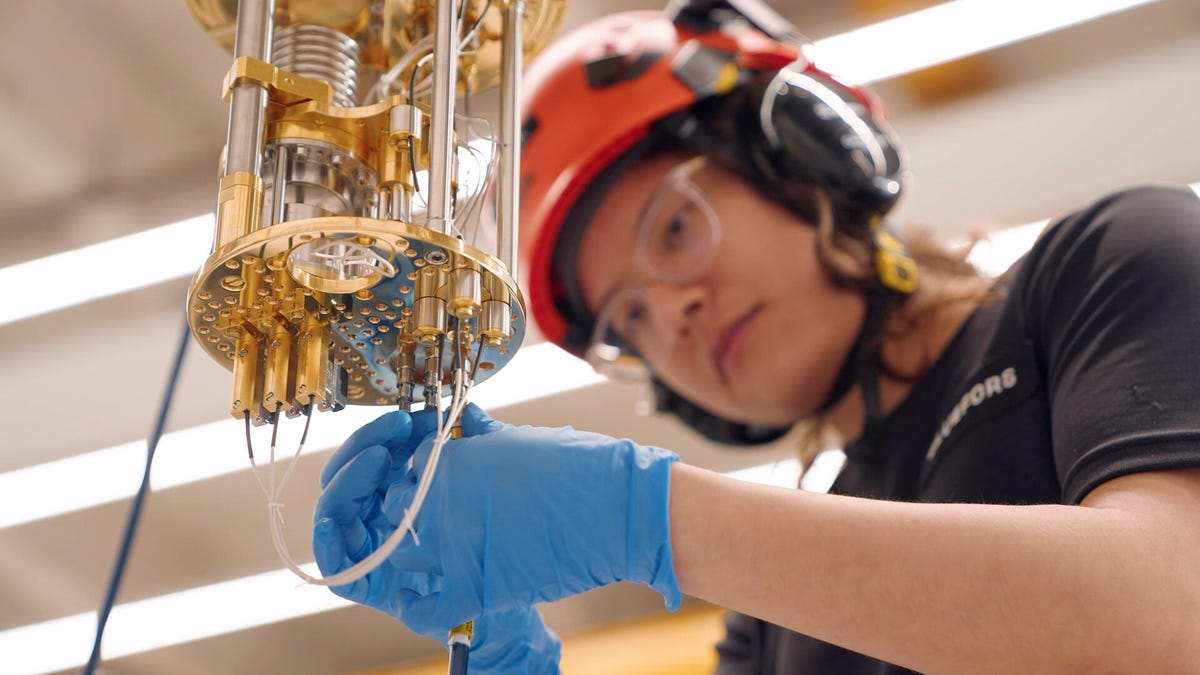
- Modern quantum computers require operating temperatures less than 1 Kelvin above absolute zero.
- This extreme cold, colder than the coldest natural place in the universe, is vital to protect sensitive qubits.
- Specialized 'dilution refrigerators' are engineering marvels, essential for enabling quantum computations.
- This advanced cooling technology is a cornerstone for realizing the full potential of quantum computing.
The Deep Dive: How Cold Unlocks Quantum Potential
At the heart of quantum computing lies a paradox: to harness the most advanced computational power, we must embrace the most extreme cold. The iconic 'chandelier-like' structures often seen in popular depictions of quantum computers are not the computers themselves, but rather highly sophisticated refrigeration systems. These systems are designed to plunge the quantum computing components, known as qubits, into an environment where temperatures are less than 1 degree above absolute zero (0 Kelvin).
Why Extreme Cold Is Non-Negotiable
Qubits, whether they are physical atoms or engineered quantum circuits, are extraordinarily sensitive to external disturbances. Even the slightest amount of thermal energy (heat) can cause them to lose their quantum properties – superposition and entanglement – leading to errors and rendering computations impossible. This phenomenon, known as decoherence, is the primary reason for the stringent temperature requirements. By operating at near-absolute zero, the environmental noise is minimized to an extent that allows qubits to maintain their delicate quantum states long enough to perform complex calculations. To put this in perspective, these temperatures are colder than the Boomerang Nebula, the coldest natural place known in the universe.
Specs & Data: Temperature Extremes Compared
To understand the monumental engineering challenge, consider the temperature differences:
| Characteristic | Quantum Computer (Qubit) | Boomerang Nebula | Typical PC Processor |
|---|---|---|---|
| Operating Temperature | < 1 K above absolute zero | 1 K above absolute zero | 300-350 K (27-77 °C) |
| Celsius Equivalent (approx) | -272.15 °C | -272.15 °C | 27-77 °C |
| Sensitivity to Heat | Extremely High | N/A | Moderate |
Market Impact: Enabling the Quantum Revolution
The development of ultra-low temperature refrigeration technology is not merely a supportive industry; it is a critical enabler for the entire quantum computing ecosystem. Companies like Bluefors specialize in building these massive dilution refrigerators, pushing the boundaries of cryogenic engineering. Without their advancements, the 'promise of quantum computing' – from breakthrough drug discovery and advanced materials science to next-generation AI and unbreakable cryptography – would remain theoretical. This indispensable cooling infrastructure is a foundational pillar, driving innovation not just in quantum hardware but also influencing research into more robust qubit architectures that might one day reduce these extreme cooling demands.
The Verdict: The Unsung Hero of Quantum Computing
The necessity of extreme refrigeration for quantum computers highlights a fascinating aspect of cutting-edge technology: sometimes the most mundane-sounding components (like a refrigerator) are in fact the most complex and critical. While the future may hold breakthroughs allowing quantum computers to operate at warmer temperatures, for now, the ability to create environments colder than deep space remains an unsung hero, an essential engineering marvel that underpins humanity's quest for quantum supremacy. It is a testament to human ingenuity to tame the fundamental forces of nature to unlock unprecedented computational power.
