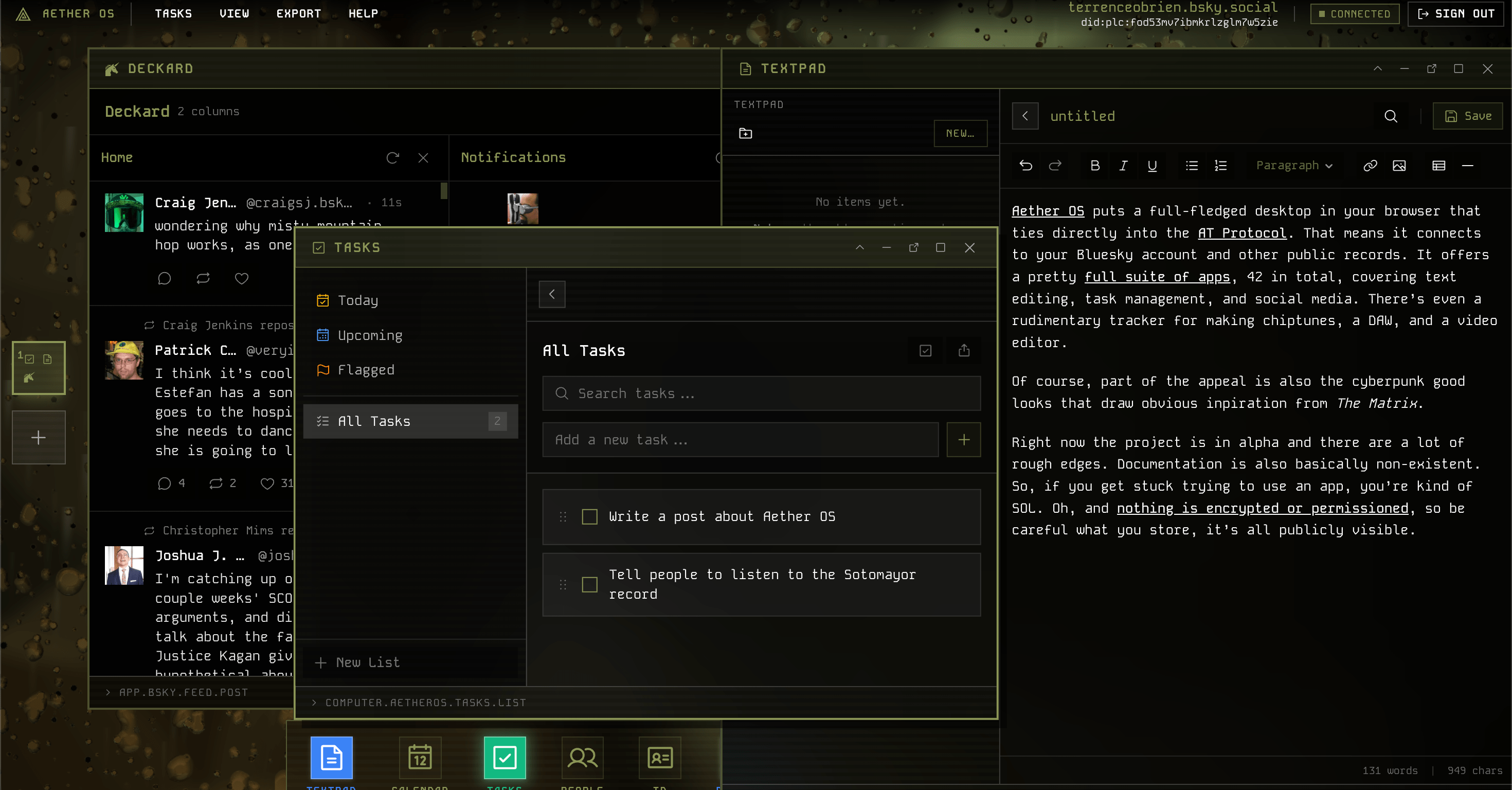
- Aether OS offers a complete desktop environment accessible directly within a web browser.
- It integrates tightly with the AT Protocol, enabling connections to platforms like Bluesky and other public records.
- The system boasts a diverse suite of 42 built-in applications, from productivity tools to creative software like DAWs and video editors.
- Crucially, the project is currently in an alpha state with non-existent documentation and *zero encryption or permissioning*, making all user data publicly visible.
Unpacking the Browser-Based Desktop
Aether OS represents an ambitious vision: a full-fledged operating system living entirely within your web browser. This innovative approach seeks to redefine accessibility, allowing users to access a complete computing environment from virtually any internet-connected device. Unlike traditional cloud desktops, Aether OS's core appeal lies in its direct integration with the AT Protocol, a federated network protocol designed for decentralized social applications. This integration means user data and activities within Aether OS are not just "in the cloud" but inherently tied into the public, verifiable ledger of the AT Protocol, including connections to services like Bluesky.
The Promise of a Public Protocol Powered Suite
The platform comes loaded with an impressive array of 42 applications. This isn't just a basic set of tools; it spans text editing, task management, and social media interactions, venturing into more specialized areas such as chiptune creation with a rudimentary tracker, a Digital Audio Workstation (DAW), and even a video editor. This breadth of functionality, coupled with its "cyberpunk good looks" reminiscent of The Matrix, positions Aether OS as a potential hub for both productivity and creative expression within a new, decentralized paradigm.
The Alarming Alpha State and Security Gaps
However, the project's current "alpha" status brings significant caveats. The Verge's report highlights "a lot of rough edges" and "basically non-existent" documentation, leaving users to navigate its features largely unsupported. More critically, the system suffers from a fundamental security flaw: "nothing is encrypted or permissioned, so be careful what you store — it’s all publicly visible." This lack of privacy and security renders Aether OS unsuitable for any sensitive personal or professional data, transforming it from a promising innovation into a stark warning about early-stage decentralized applications.
| Feature | Detail / Status | Notes |
|---|---|---|
| Platform Type | Browser-based Desktop OS | Accessible via web browser |
| Core Protocol Integration | AT Protocol | Connects to Bluesky & public records |
| Number of Apps | 42 | Includes text editor, task manager, social media, DAW, video editor, chiptune tracker |
| Current Development Stage | Alpha | "Lots of rough edges" |
| Documentation | Non-existent | Users are "kind of SOL" if stuck |
| Data Encryption | None | All stored data is publicly visible |
| Data Permissioning | None | No access controls |
| Aesthetic | Cyberpunk / The Matrix inspired | Visual appeal is noted |
Reshaping the Landscape of Decentralized Computing?
Aether OS, despite its significant flaws, points towards a potential future where operating systems and applications are deeply intertwined with decentralized protocols. Its attempt to provide a full desktop experience within a browser, leveraging the AT Protocol, could inspire further development in web-native, protocol-driven computing. If successful in overcoming its security and stability challenges, it could foster a new category of open, interoperable digital environments, challenging the dominance of walled-garden ecosystems.
A Cautionary Tale for Early Adopters
However, its current state serves as a powerful cautionary tale. The complete lack of encryption and permissioning means any market impact it currently has is likely negative, highlighting the critical importance of security and data privacy in decentralized applications. Developers building on new protocols must prioritize these aspects from the outset to build trust and ensure user safety, especially when dealing with personal data and public records. Aether OS demonstrates the allure of a new vision but also the perilous path of early innovation without fundamental safeguards.
Ambitious Vision, Critical Flaws
Aether OS presents an undeniably compelling concept: a versatile, browser-based desktop deeply integrated with the decentralized AT Protocol. The vision of a truly open and accessible computing environment, complete with a rich suite of applications, is both innovative and exciting. However, in its current alpha form, Aether OS is far from ready for public consumption, particularly due to its shocking lack of encryption and permissioning, which renders all user data publicly exposed. While its cyberpunk aesthetic and broad app selection are appealing, the fundamental security vulnerabilities and lack of documentation make it a curiosity for tech enthusiasts rather than a practical tool. Until these critical issues are addressed, Aether OS remains a fascinating experiment that prioritizes public integration at the expense of privacy and security.
