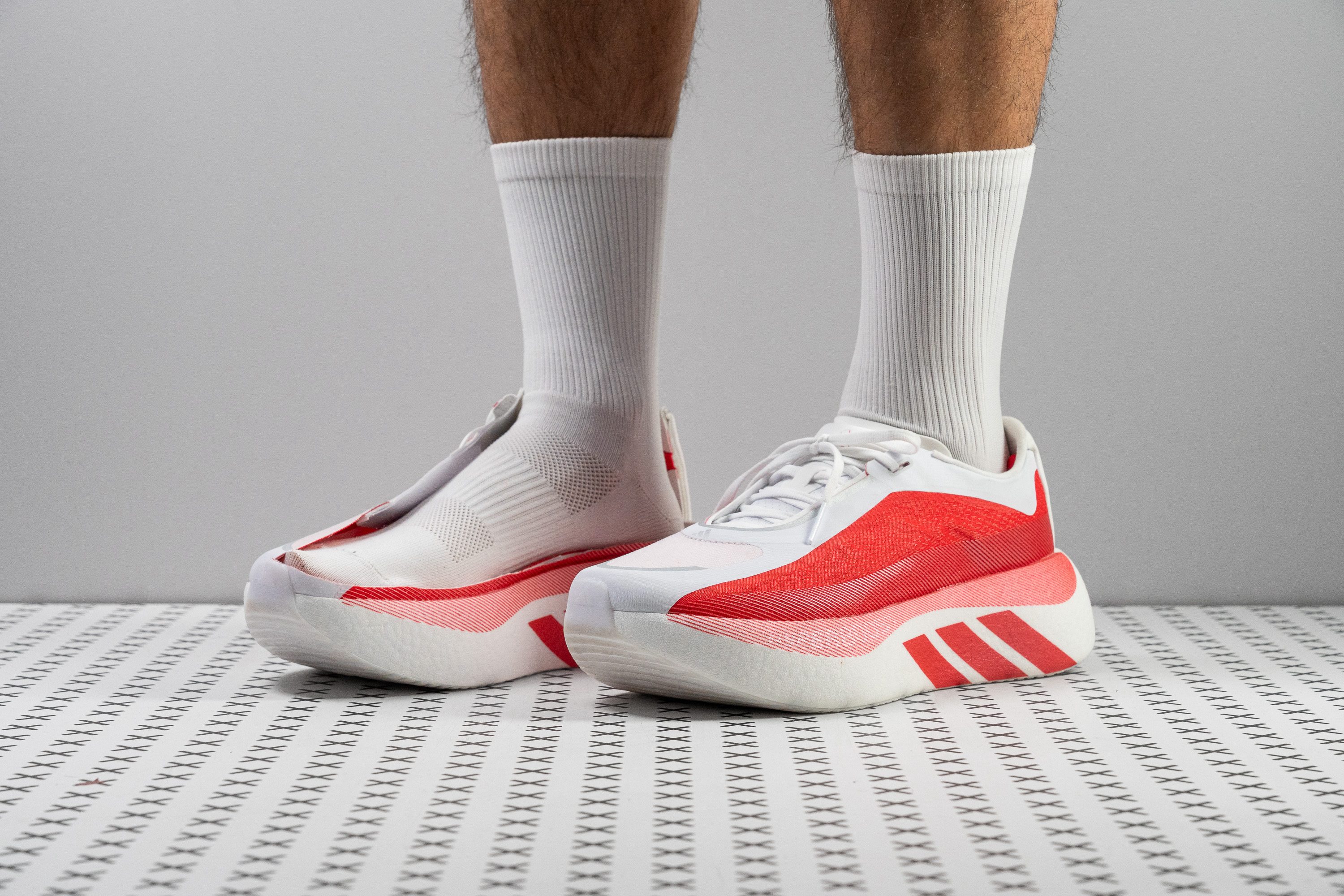
- The Adidas Hyperboost Edge introduces revolutionary PEBA-based Hyperboost Pro foam, achieving an outstanding 73.6% energy return in lab tests.
- It delivers an ultra-cushioned ride with a massive 44.6mm heel and 38.1mm forefoot stack height, prioritizing protection over ground feel.
- Features the new GCPU-based LIGHTTRAXION outsole, setting a new benchmark for wet grip (0.89) while maintaining a remarkably lightweight profile of 8.7 oz (247g).
- Designed for performance, it offers a race-snug, tapered toe box and limited ventilation, making it ideal for specific runner preferences and cooler climates.
The Deep Dive: Unpacking Hyperboost Pro & LIGHTTRAXION
Adidas has positioned the Hyperboost Edge as a breakthrough in training footwear, and our lab analysis largely confirms these claims. At the heart of its performance is the new Hyperboost Pro foam. This PEBA-based compound isn't just marketing hype; it delivered an impressive 73.6% energy return during ASTM F1976 procedures. This figure not only outperforms nearly every other 'super trainer' on the market but also surpasses industry benchmarks like the ASICS Megablast, fundamentally changing expectations for responsiveness in a training shoe. The 'Why' is clear: superior energy return translates directly to more efficient propulsion and reduced fatigue over long distances, making every stride count.
The shoe's cushioning strategy is equally aggressive. With a colossal 44.6mm heel stack and 38.1mm forefoot stack height, the Hyperboost Edge is unequivocally a max-cushioned shoe. Our lab data supported Adidas's claim, recording 154 SA in the heel and 145 SA in the forefoot. This generous amount of Hyperboost Pro foam provides an ultra-protected ride with minimal ground feel, designed for runners seeking maximum shock absorption and comfort, particularly during high-mileage training. The 6.5mm measured drop, close to the stated 6mm, combined with a late-stage forefoot rocker, promotes an aggressive toe-off and suits midfoot strikers best, while its stable geometry accommodates other footstrike patterns.
Innovative Outsole: The LIGHTTRAXION Advantage
Adidas is actively moving away from its long-standing Continental partnership, and the Hyperboost Edge showcases the impressive capabilities of their new GCPU-based LIGHTTRAXION compound. Our wet concrete lab test yielded an outstanding 0.89 grip rating – a rare feat in the industry. This 'How' is critical: polyurethane-based outsoles like LIGHTTRAXION offer a lower weight profile compared to traditional rubber, allowing Adidas to implement full-length outsole coverage without adding significant bulk. This design choice addresses a common vulnerability in many super trainers, which often expose large areas of foam to save weight, compromising durability. LIGHTTRAXION offers both superior grip and enhanced longevity, a significant 'Why' for runners hard on their outsoles.
Fit, Ventilation & Weight: Performance-Driven Trade-offs
While technically impressive, the Hyperboost Edge's fit and ventilation present notable design choices. The shoe features a classic tapered toe box, measuring 71.4mm at its narrowest, contributing to a race-snug feel. Despite a wider-than-average midfoot (97.4mm), the restricted toe box height (24.8mm) means it's not ideal for runners requiring ample toe splay or wider feet. This emphasizes a performance-oriented 'Why' over universal comfort. The Primeweave upper, while premium and comfortable with amazing heel padding, exhibits limited ventilation, earning a low 2/5 rating. This design, visually reminiscent of older basketball shoes, makes the Hyperboost Edge better suited for colder or mild climates, as overheating can occur on hot days – a significant 'How' that impacts usability.
Despite the massive stack, the Hyperboost Edge remains remarkably lightweight at 8.7 oz (247g). While its closest rival, the ASICS Megablast, is lighter, the Hyperboost Edge is still 32% lighter than shoes like the Nike Vomero Premium, highlighting a successful balance of cushioning and low mass. The substantial foam provides noticeable stiffness (19.8N in a 30-degree bend test) even without a carbon plate, contributing to its responsive ride.
Specs & Data: Adidas Hyperboost Edge Technical Breakdown
| Metric | Adidas Hyperboost Edge | Industry Context |
|---|---|---|
| Heel Stack Height | 44.6 mm | "Max-cushioned" category, significantly above average. |
| Forefoot Stack Height | 38.1 mm | Often matches or exceeds typical heel heights in other trainers. |
| Measured Drop | 6.5 mm | Ideal for midfoot strikers, versatile for all patterns. |
| Energy Return (ASTM F1976) | 73.6% | Outperforms most super trainers, sets new benchmark. |
| Foam Softness (Asker C) | 32.5 AC | Not "ultra-plush," but noticeably soft and cushioned. |
| Weight | 8.7 oz (247g) | Remarkably lightweight for its size; 32% lighter than Nike Vomero Premium. |
| Stiffness (30-degree bend) | 19.8 N | Noticeable stiffness even without a plate. |
| Outsole Wet Grip (LIGHTTRAXION) | 0.89 | Outstanding result, rare in wet conditions. |
| Toebox Width (tapered) | 71.4 mm | Performance-oriented, snug fit; not for wide feet. |
| Ventilation Rating | 2/5 | Poor airflow, better for cold/mild climates. |
Market Impact: Reshaping the Super Trainer Landscape
The Adidas Hyperboost Edge is poised to make a significant splash in the competitive super trainer segment. Its groundbreaking 73.6% energy return with Hyperboost Pro foam effectively raises the bar for what runners can expect from a daily training shoe. This innovation challenges established players and compels competitors to redouble their R&D efforts in foam technology, accelerating the pace of material science innovation across the industry. Furthermore, the debut of LIGHTTRAXION as a high-performance, lightweight, and durable outsole compound signifies a potential shift in outsole material standards, offering a compelling alternative to traditional rubber and allowing for full-coverage designs without weight penalties. This could influence future designs across various performance footwear categories.
While its max-cushioned, protective ride appeals strongly to long-distance runners, those recovering from injuries, or anyone prioritizing comfort over ground feel, its specific fit characteristics (tapered toe box) and limited ventilation mean it won't be a universal crowd-pleaser. However, by embracing these trade-offs for enhanced performance in key areas, Adidas carves out a distinct niche, potentially segmenting the market further between pure performance and broad versatility. The high price point will position it as a premium offering, appealing to serious runners willing to invest in cutting-edge technology for tangible performance gains.
The Verdict: A Specialized Marvel
The Adidas Hyperboost Edge is a testament to Adidas's commitment to innovation in running footwear. It unequivocally delivers on its promises of exceptional energy return through the Hyperboost Pro foam and a supremely cushioned ride, making it a powerful contender in the super trainer category. The introduction of the LIGHTTRAXION outsole is another genuine breakthrough, providing outstanding grip and durability while managing weight effectively. However, this is not a shoe without its compromises. Its snug, tapered toe box and notably poor ventilation make it a specialized tool best suited for runners with narrower feet and those training in cooler conditions. For those specific users seeking maximum protection, groundbreaking energy return, and superior wet-weather grip in a remarkably lightweight package, the Hyperboost Edge stands out as a top-tier, albeit pricey, option. It's a specialized marvel that pushes the boundaries of performance, rather than a versatile daily workhorse for every runner.
