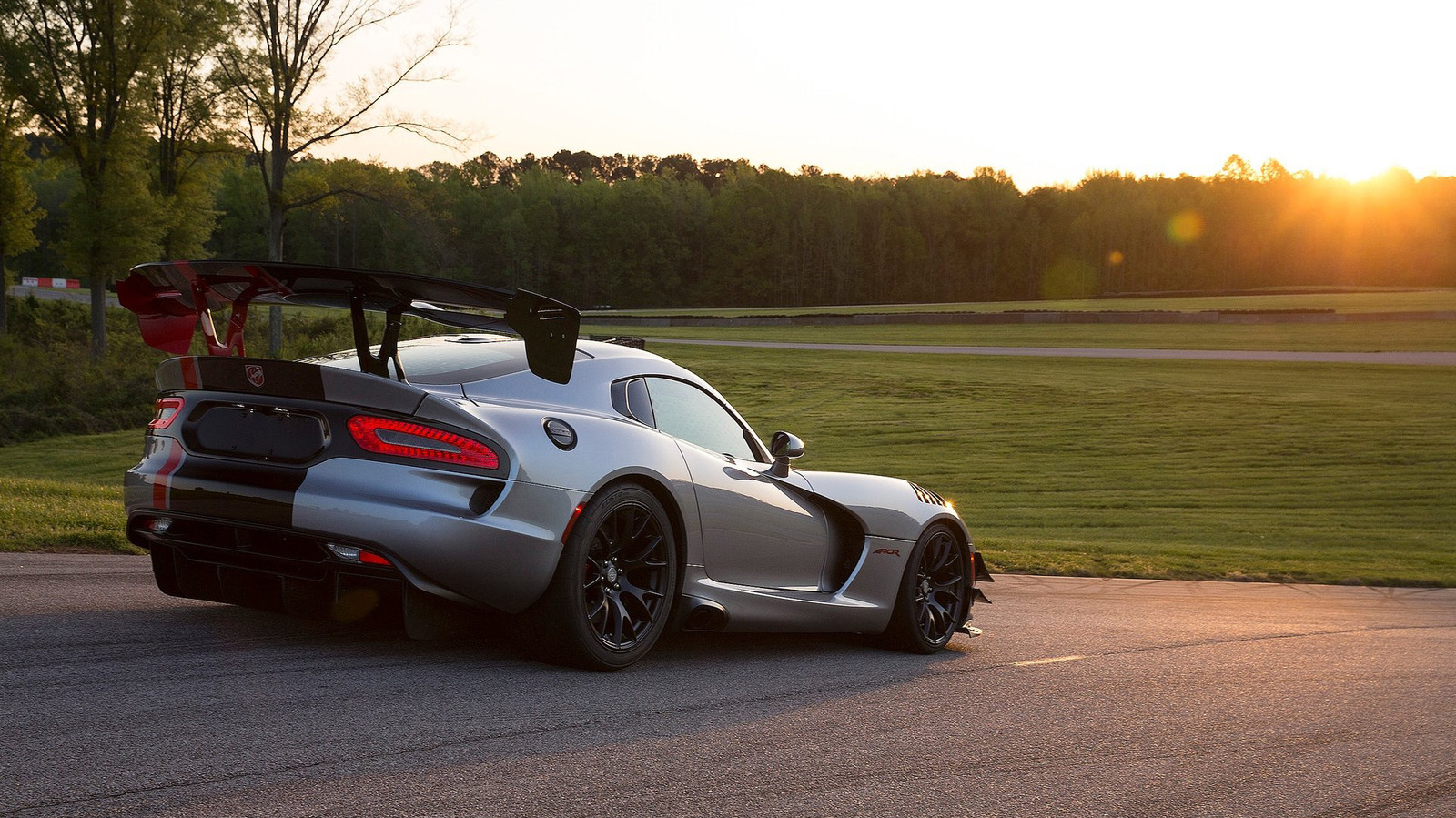
- Automotive aerodynamics, a design principle dating back to 1899, is crucial for vehicle performance and efficiency, pioneered by figures like Camille Jenatzy and Paul Jaray.
- Despite over a century of advancements, several iconic vehicles, including the Volkswagen Beetle RSi and Lamborghini Countach, surprisingly exhibited significant aerodynamic inefficiencies.
- Factors like budget constraints, design priorities over performance, and technological limitations of their era contributed to the high drag coefficients of these otherwise notable cars.
- Modern automotive design, exemplified by vehicles utilizing principles like the Kamm-tail, continues to prioritize streamlined shapes for optimal efficiency and speed.
The Enduring Quest for Aerodynamic Prowess
The pursuit of aerodynamic efficiency in automobiles is almost as old as the vehicle itself. Early innovators like Camille Jenatzy demonstrated its power in 1899 with his bullet-shaped electric "Red Devil," smashing the 100 km/h barrier. Decades later, Zeppelin designer Paul Jaray and figures like Edmond Ruppler, with his teardrop-shaped Rumpler Tropfenwagen (0.28 Cd), further refined the concept of slicing through air. The 1930s saw Wunibald Kamm introduce the impactful "Kamm-tail," a design still found in modern vehicles like the Tesla Model Y, proving that efficient design is both a historical and ongoing challenge.
When Design Trumped Drag: Notable Aero-Fails
Despite these early lessons, many automakers struggled to integrate optimal aerodynamics into mass-produced or even high-performance vehicles, often prioritizing aesthetics or other engineering challenges. The text highlights several examples where legendary status didn't equate to slipperiness:
Volkswagen New Beetle RSi: The High-Performance Brick (0.40 Cd)
The 1998 New Beetle aimed for a modern take on an icon but ironically sported worse aerodynamics (0.38 Cd) than its Golf platform-mate (0.31 Cd). The RSi variant, despite its 3.2-liter VR6 engine, AWD, and carbon fiber body panels, was further hampered by aggressive wheel arches and a massive rear spoiler, pushing its drag coefficient to a substantial 0.40 Cd. While Volkswagen claimed the spoiler generated downforce, the overall inefficiency prevented the car from reaching its theoretical top speed of 160 mph, peaking at just 140 mph.
Lamborghini Countach: The Iconic Wedge's Secret Flaw (0.42 Cd)
Marcello Gandini's revolutionary, wedge-shaped Lamborghini Countach visually screamed speed, yet its aerodynamic efficiency was surprisingly poor, registering 0.42 Cd without its signature rear wing. This inefficiency wasn't due to a lack of vision but rather budget constraints that precluded wind tunnel testing during its development. This resulted in a car that, despite its more powerful engine and lighter weight, barely outperformed the aerodynamically superior (0.36 Cd) Ferrari Testarossa in top speed during contemporary tests.
Fiat 127: The Boxy City Car (0.45 Cd)
While celebrated for its innovative front-wheel-drive layout and space efficiency for a 1970s city car, the Fiat 127's boxy design contributed to a drag coefficient of 0.45 Cd. While respectable for its era and class, this limited the performance of its small 903-cc engine, resulting in a modest top speed of 87 mph.
Original Volkswagen Beetle: The Streamlined Paradox (0.48 Cd)
Inspired by Tatra's streamlined designs, the original Beetle was surprisingly aerodynamically inefficient with a 0.48 Cd. While not terrible for its 1930s inception (where many cars exceeded 0.6 Cd), design compromises for mass production, utility, and cost meant it fell short of the slipperiness of its more sporting cousin, the Porsche 356 (0.296 Cd), which featured a lower stance and curvier windshield.
Key Aerodynamic Data & Performance Snapshot
Understanding a vehicle's drag coefficient (Cd) is crucial for evaluating its performance and efficiency. Here's a comparison of some noted cars, both pioneers and less efficient designs:
| Car Model | Year/Era | Drag Coefficient (Cd) | Notes |
|---|---|---|---|
| Rumpler Tropfenwagen | 1921 | 0.28 | World's first streamlined production car |
| Ferrari Testarossa | 1980s | 0.36 | Aero-superior to Countach |
| VW Golf (Mk3/Mk4 era) | 1990s | 0.31 | Platform basis for New Beetle |
| VW New Beetle | 1998 | 0.38 | Higher drag than Golf counterpart |
| VW Beetle RSi | Early 2000s | 0.40 | Aggressive styling worsened aerodynamics |
| Lamborghini Countach | 1970s-1980s | 0.42 (w/o rear wing) | Iconic design, limited aero development |
| Fiat 127 | 1972 | 0.45 | Good for its time, but boxy profile |
| Original VW Beetle | 1930s-2000s | 0.48 | Classic shape with surprising drag |
| Porsche 356 | 1948 | 0.296 | Sporty Beetle derivative, much more aero |
Shaping the Future: The Unseen Influence of Drag
The journey through the least aerodynamic cars underscores a fundamental tension in automotive design: the balance between aesthetics, utility, and scientific efficiency. While historical limitations often excused high drag coefficients, modern performance and fuel economy demands have made aerodynamic optimization a non-negotiable aspect of vehicle development. The story of these cars serves as a powerful historical lesson, demonstrating how critical wind tunnel testing, computational fluid dynamics (CFD), and integrated design thinking are to achieving optimal vehicle performance. The lingering presence of the "Kamm-tail" in contemporary vehicles highlights that fundamental aerodynamic principles, once discovered, remain eternally relevant, continuously pushing the boundaries of what's possible in automotive engineering.
The Verdict: More Than Just Form, It's Function
The legacy of these less-than-slippery automotive icons is not one of failure but of evolution. They represent fascinating snapshots in time where design, budget, or engineering priorities led to distinctive, yet aerodynamically compromised, creations. Their stories highlight the continuous effort to harmonize form and function in the automotive world, proving that while groundbreaking design can define an era, true technical excellence demands meticulous attention to every force acting upon the vehicle, especially the unseen resistance of the air.
