- Tech developers are increasingly designing AI-powered robots with 'cute' and pet-like aesthetics to foster human acceptance and trust.
- This design shift moves away from traditional industrial robots, focusing on features like rounded shapes, large eyes, and expressive sounds to evoke biological responses.
- Examples include DoorDash's delivery robot Dot, Interaction Labs' companion lamp Ongo, and Sunday Robotics' household helper Memo, all aiming for a human-friendly persona.
- While enhancing user interaction, this trend also raises concerns about emotional dependency, data privacy, and the ethical implications of anthropomorphizing machines.
The Deep Dive: How Charm is Redefining Robotics
The streets are no longer just for people and pets; they're increasingly shared with autonomous robots designed to deliver food, offer companionship, and assist with household tasks. But the success of these machines hinges on more than just their functional capabilities. Tech companies are now in a race to win human hearts, leveraging design principles rooted in psychology to make robots approachable, trustworthy, and even 'cute'.
Why 'Cute' Sells: The Psychology Behind Robot Design
The motivation behind the shift to 'cute' robot designs is deeply rooted in human-robot interaction research. As Ellie Sanoubari, a postdoctoral researcher, explains, developers want their products to be perceived as friendly and non-threatening. This signals comfort and safety, crucial for integrating robots into public and private spaces. Design choices such as larger heads, big eyes (known as 'kinderschema'), and pleasant sounds are intentionally used to trigger 'deeply seated biological responses' in humans, fostering a sense of affection and empathy. This approach helps bridge the gap between inanimate machinery and perceived companions, making interactions more natural and less intimidating.
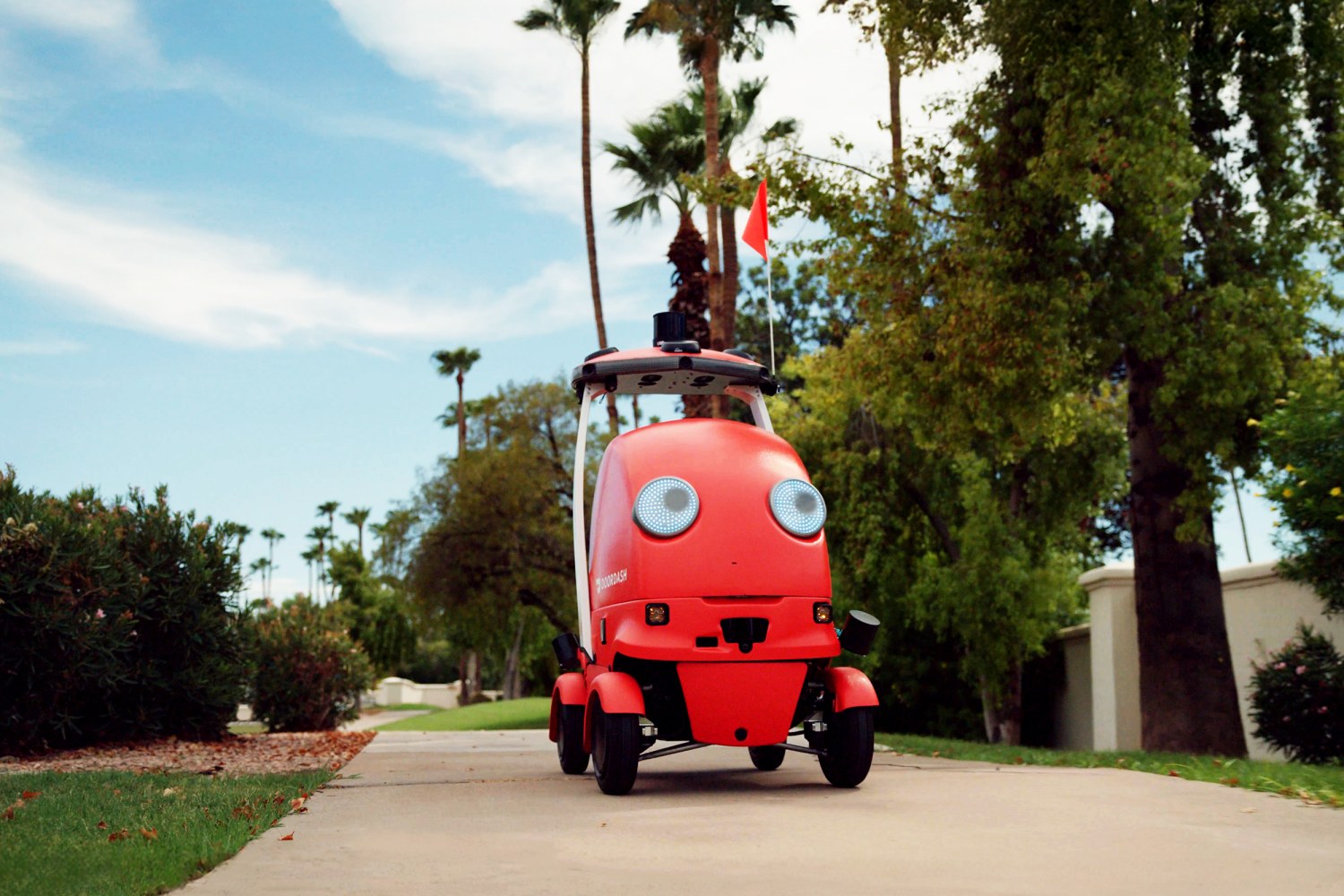
DoorDash exemplifies this strategy with its delivery robot, Dot. Designed to navigate urban environments at speeds up to 25 mph, Dot also features a rounded body, which studies show humans prefer over sharp, boxy forms. Its large, circular eyes are not merely aesthetic; they are functional, signaling the robot's intended direction and making 'eye contact' with pedestrians to indicate when it's safe to cross. These design elements, coupled with sounds announcing its presence, aim to build acceptance and trust as people familiarize themselves with Dot's characteristics.
Beyond Function: Crafting Robot Personalities and Companions
The pursuit of human acceptance extends beyond delivery. Interaction Labs, a California startup, even brought in Oscar-nominated 'Toy Story' writer Alec Sokolow to design Ongo, an interactive lamp. Ongo moves like the Pixar lamp, speaks in a cartoonish voice, and learns about its users, acting as an AI companion. Sokolow describes Ongo as 'somewhere between a pet and a concierge,' emphasizing the creation of a distinct personality rather than just a utility. Similarly, Sunday Robotics designed Memo, a household task robot, with an aesthetic reminiscent of Disney's Baymax, aiming for a humanlike appearance without triggering the 'uncanny valley' effect. Their goal is a robot that is robust but also cute enough to be perceived as friendly and harmless, experimenting with customizable features like hats to further enhance its 'cuteness factor.'
The Ethical Tightrope: Dependency and Transparency
While the benefits of user acceptance are clear, experts like Sanoubari warn about the potential risks. As AI-powered robots become more emotionally engaging, there's a growing concern about fostering emotional dependency, mirroring issues seen with chatbots. Questions around data privacy, the absence of robust guardrails, and inappropriate interactions, especially with vulnerable populations like children or the elderly, are paramount. Transparency about the machine nature of these technologies is crucial to mitigate these ethical challenges, ensuring that human connection doesn't overshadow informed understanding of artificial intelligence.
Specs & Design Approaches
| Robot Name | Primary Function | Key Design Features | Human-Centric Goal | Developer/Origin |
|---|---|---|---|---|
| DoorDash Dot | Food Delivery | Rounded body, large circular eyes, directional signaling, expressive sounds. Navigates up to 25 mph. | Foster human acceptance and trust in public spaces. | DoorDash |
| Interaction Labs Ongo | Interactive Lamp / AI Companion | Wide-eyed, cartoonish voice, physical movement (like Pixar lamp), learns over time. | Create a 'pet-concierge' personality, act as a companion/AI agent. | Interaction Labs |
| Sunday Robotics Memo | Household Tasks (loading dishwashers, folding socks) | Baymax-like appearance, 'Nintendo/Lego' aesthetic, avoids uncanny valley, customizable accessories. | Be perceived as robust yet cute, non-threatening, familiar. | Sunday Robotics |
| Tombot Jennie | Robotic Pet | Resembles a Labrador retriever, designed for emotional support. | Provide emotional support and companionship. | Tombot |
Market Impact: Reshaping Consumer Robotics
The emphasis on 'cute' design marks a pivotal shift in the consumer robotics industry. Driven by advancements in AI, this sector is experiencing significant growth, moving robots out of factories and into homes and public spaces. The focus on human-robot interaction (HRI) design is creating an entirely new paradigm for product development, where emotional appeal is as crucial as functional efficiency. Companies are striving to balance a robot's responsiveness with its physical charm, recognizing that these softer features and humanlike gestures facilitate quicker attachment and adoption. This trend will likely lead to a proliferation of personalized, interactive robots, but also necessitates robust ethical frameworks to manage the social and psychological implications of increasingly humanized AI agents.
The Verdict: A Future of Lovable Machines?
The deliberate design of 'cute' robots is a strategic move by tech companies to overcome initial human apprehension and accelerate the integration of AI-powered machines into daily life. By tapping into fundamental human psychology, these designs aim to foster acceptance, trust, and even affection, transforming how we perceive and interact with technology. While promising a future of more engaging and helpful robotic companions, this evolution demands careful consideration of ethical boundaries, particularly regarding emotional dependency and data privacy. The success of this 'cuteness offensive' will ultimately depend on balancing innovative design with responsible deployment, ensuring that our lovable machines serve humanity without compromising its well-being.
