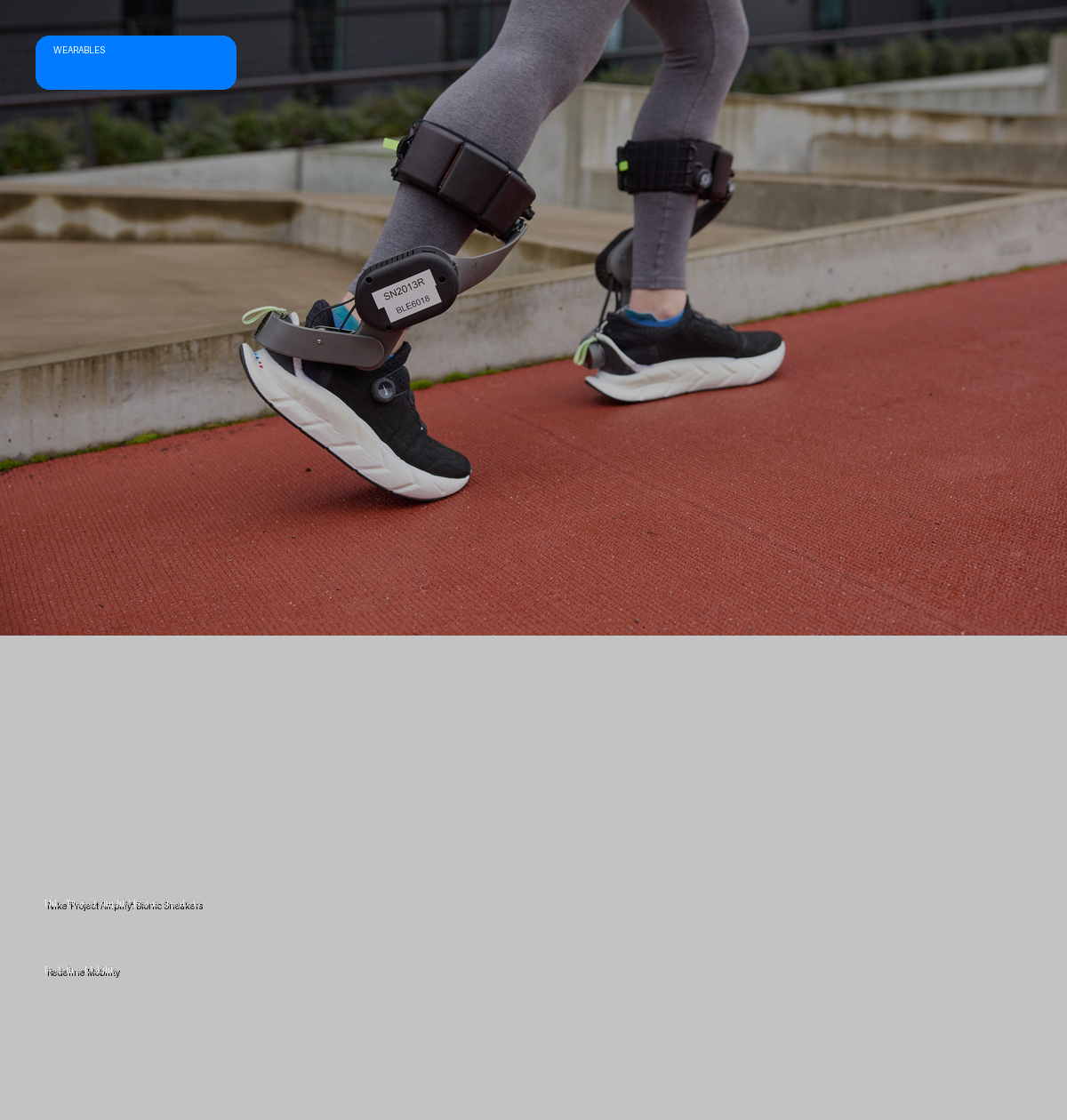
- Nike's Project Amplify is a new bionic sneaker system designed to enhance everyday human mobility, slated for a 2028 commercial launch.
- The system combines standard-looking sneakers with carbon fiber plates, attached to 3D-printed titanium leg shells containing motors, sensors, and circuitry.
- It dynamically learns user movement patterns, providing natural and smooth propulsion, akin to an "e-bike for your feet."
- Controlled via a smartphone app, Project Amplify aims to extend personal range and confidence for a broad audience, from casual walkers to runners.
Unveiling Project Amplify: The 'E-Bike for Your Feet'
Nike's Project Amplify represents a significant leap in assisted human locomotion, aiming to democratize enhanced mobility. Developed in collaboration with Massachusetts-based startup Dephy, this innovative footwear system transcends traditional athletic shoes by integrating advanced robotics and AI into personal wearable tech. The core philosophy, as articulated by Mike Yonker, head of Project Amplify, is that "If you have a body, you're an athlete," positioning the technology for a wide consumer base beyond elite sports.
How the Bionic System Works
Unlike previous attempts to electrify footwear, Project Amplify addresses the critical challenge of power and propulsion by extending beyond the shoe itself. The system comprises two main components: a seemingly standard sneaker featuring a carbon fiber plate embedded in the sole, and a close-fitting, 3D-printed titanium leg shell. These leg shells, which cinch to the calves, house the sophisticated battery-powered contraptions, including complex motors, an array of sensors, and intricate circuitry. Weighing a couple of pounds, these units function as external muscles, seamlessly integrating with the wearer's natural gait.
Intelligent Adaptation and Control
The intelligence of Project Amplify lies in its adaptive algorithms. Alison Sheets-Singer, Project Amplify's lead scientist, explains that the system "learns how your ankles are moving, how long your steps are, taking the algorithms and customizing them for you." This personalized learning ensures that when activated, the assistance feels "natural and smooth." Users manage the system via a smartphone app, which allows for power control and toggling between various speed settings for both "walk" and "run" modes. When engaged, the leg shells actively assist by picking up the heels and propelling the feet forward, providing a purposeful boost.
A Legacy of Speed: Evolution of Assisted Movement
The quest for faster and more efficient human movement has a long history, from ancient bone skates to 19th-century roller skates. While athletic shoes in the 1970s focused on lighter materials and 1980s sneakers introduced rudimentary electronics for tracking, Project Amplify marks a pivotal shift. Earlier innovations struggled with the immense power required to propel a human. Elizabeth Semmelhack, director and senior curator of the Bata Shoe Museum, highlights that "The energy needed to propel a human being forward is so significant that we do not have an energy source yet that is small enough that can be placed within a shoe." This limitation led Nike and collaborators like Dephy to adopt the leg-shell design, which can house the necessary battery capacity (sufficient for a 10-kilometer run with swappable batteries) and powerful motors.
Key Specifications & Features: Nike Project Amplify
| Feature | Description |
|---|---|
| Launch Target | 2028 (Commercial) |
| Core Components | Standard-looking sneakers + Close-fitting leg shells |
| Sneaker Tech | Carbon fiber plate through soles |
| Leg Shell Material | 3D-printed titanium |
| Internal Systems | Battery-powered motors, sensors, complex circuitry |
| Approx. Weight (Leg Shells) | Couple of pounds per unit |
| Battery Life | Roughly a 10-kilometer run (rechargeable, swappable) |
| Control Interface | Smartphone app (On/Off, Speed Settings, Walk/Run Modes) |
| Key Functionality | Learns ankle movement & step length; customized propulsion; picks up heels and propels feet forward |
| Collaborator | Dephy (Massachusetts-based startup) |
Transforming Personal Mobility and the Footwear Industry
The potential market impact of Project Amplify is profound, extending far beyond competitive athletics. Experts foresee a paradigm shift akin to the rise of e-bikes, which have revitalized cycling for a broader demographic, including older individuals or those with reduced physical capabilities. Luke Mooney, co-founder and CEO of Dephy, identifies a phenomenon of "personal range anxiety," where individuals limit activities due to concerns about comfort or pain. Project Amplify aims to alleviate this anxiety, restoring confidence and enabling participation in activities previously out of reach.
This technology could unlock new recreational activities for millions, fundamentally expanding the definition of an "athlete." It positions Nike not just as a shoe company, but as a leader in personal mobility solutions, potentially spurring a wave of innovation across the bionic, footwear, and exoskeleton sectors. The bustling "bionic, footwear, exoskeleton" category at CES underscores the burgeoning interest and investment in this space, with competitors like Dephy's Sidekick and Ascentiz H+K's motorized exoskeletons already emerging. Project Amplify, with Nike's brand power, is poised to accelerate mainstream adoption and define the future of assisted walking and running.
The Verdict: A Glimpse into the Future of Human Movement
Nike's Project Amplify is not merely an incremental upgrade but a revolutionary step in personal mobility technology. By addressing the critical power challenges that plagued earlier electronic footwear, and by leveraging intelligent, adaptive robotics, Nike is poised to introduce a product that could genuinely enhance the lives of millions. The "e-bike for your feet" analogy is apt, suggesting a future where technology seamlessly augments human capabilities, making movement more accessible, enjoyable, and efficient for everyone. While the 2028 launch is still some years away, the successful prototyping and strategic collaboration signal a credible and highly anticipated innovation set to redefine how we move.
