Executive Summary: AxEMU Readiness
- NASA’s next-generation AxEMU spacesuit, developed by Axiom Space for Artemis III, has successfully passed a critical contractor-led technical review.
- The AxEMU promises significantly increased flexibility, mobility, and enhanced protection, crucial for astronauts exploring the Moon’s South Pole.
- Rigorous testing, including over 850 hours of pressurized evaluations and simulated lunar gravity environments, ensures astronaut safety and operational efficiency.
- This milestone brings NASA closer to returning humans to the lunar surface with advanced capabilities, paving the way for future Mars missions.
The Deep Dive: Engineering Lunar Mobility
Revolutionizing Lunar Exploration Gear
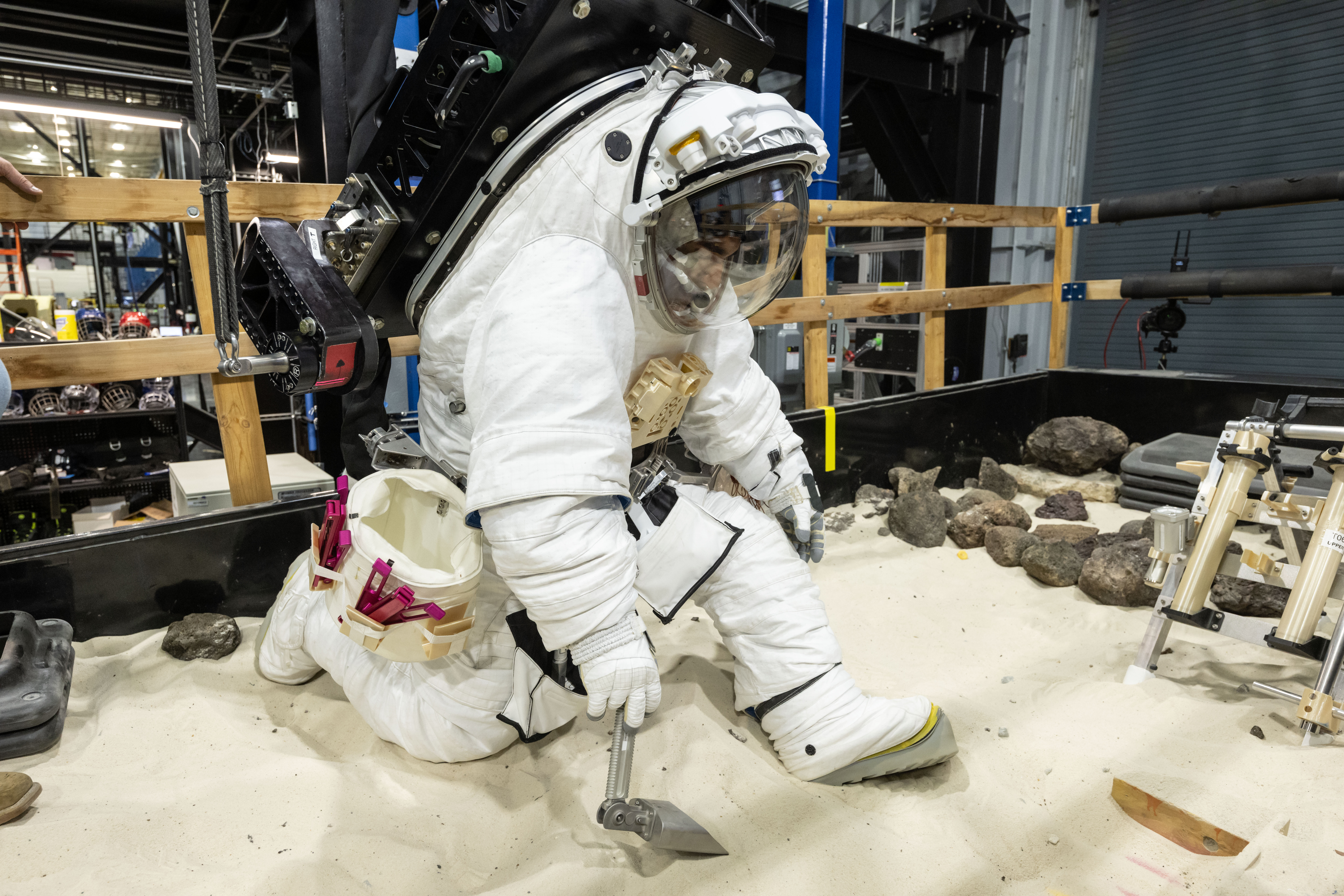
The AxEMU (Axiom Extravehicular Mobility Unit) represents a significant leap in spacesuit technology, moving beyond the constraints of previous designs. As NASA prepares to send astronauts to the Moon’s South Pole for the first time with Artemis III, the demand for a suit capable of handling unprecedented scientific and exploratory tasks is paramount. Unlike earlier suits, the AxEMU focuses heavily on enhancing astronaut agility, allowing for complex movements like bending to collect geology samples and performing intricate scientific operations.
How the AxEMU Delivers Unparalleled Performance
Axiom Space’s design prioritizes human factors, offering increased sizing options and adjustability to accommodate a wider range of crew members. This inclusivity ensures that more astronauts can comfortably and safely perform duties on the lunar surface. Beyond fit, the suit integrates advanced life-support systems crucial for sustained operations in the Moon’s harsh environment, coupled with enhanced protection against radiation, extreme temperatures, and micrometeoroids. Specialized tools developed by Axiom Space will further aid astronauts in sample collection and surface work, streamlining scientific endeavors.
Rigorous Testing Ensures Lunar Readiness
Before any astronaut steps foot on the Moon in the AxEMU, the suit undergoes an exhaustive gauntlet of tests. Over 850 hours of pressurized testing have been completed, alongside extensive simulated lunar gravity tests conducted in facilities like NASA Johnson Space Center’s Neutral Buoyancy Laboratory and Active Response Gravity Offload System (ARGOS). These simulations allow astronauts and engineers to practice mobility and tasks in conditions mimicking one-sixth Earth’s gravity, providing invaluable feedback for design refinement. The ongoing NASA-led critical design sync review will be the final technical evaluation to confirm the suit's readiness for flight and delivery.
Specs & Data: AxEMU vs. Legacy Lunar Suits
The AxEMU builds upon decades of NASA's spacesuit expertise, integrating new technologies to address the challenges of modern lunar exploration:
| Feature | AxEMU (Artemis III) | Previous Lunar Suit (e.g., Apollo A7L) |
|---|---|---|
| Manufacturer | Axiom Space | ILC Dover (under NASA contract) |
| Mobility/Flexibility | Significantly increased for bending, deep knee squats, sample collection | Limited flexibility, constrained bending at waist/knees |
| Sizing & Adjustability | Increased sizing options, highly adjustable for diverse crew members | More standardized sizes, less dynamic adjustability |
| Life Support Systems | Advanced, integrated systems for extended missions | Robust, but less advanced by modern standards |
| Environmental Protection | Enhanced for harsh lunar South Pole conditions (e.g., extreme temps, radiation) | Designed for specific lunar environments, less focus on poles |
| Primary Mission Focus | Lunar South Pole exploration, deep scientific discovery, Mars precursor | Equatorial lunar exploration, flag & footprint missions |
| Testing Protocol | >850 hours pressurized, extensive underwater & simulated gravity tests with astronaut feedback | Rigorous ground and vacuum chamber tests, some simulated gravity |
Market Impact: Reshaping Commercial Space & Exploration
The development and imminent deployment of the AxEMU carry significant implications for the aerospace industry and future space exploration. Firstly, it underscores the growing reliance on commercial partners like Axiom Space for critical space hardware, validating NASA's strategy of fostering a robust commercial space ecosystem. This partnership model is likely to encourage further private sector investment and innovation in space technology.
Secondly, the AxEMU's advanced capabilities are fundamental to unlocking new frontiers of scientific discovery on the Moon. Its design enables more challenging expeditions to previously inaccessible regions like the lunar South Pole, which is believed to harbor water ice. Success here will not only yield invaluable scientific data but also inform strategies for resource utilization on the Moon, a critical step for sustained lunar presence and future Mars missions. The technological advancements embedded in the AxEMU will undoubtedly influence the design of future planetary exploration suits, setting new industry standards for mobility, safety, and operational longevity in extreme environments.
The Verdict: A New Era of Lunar Mobility
The AxEMU represents a pivotal advancement in human spaceflight hardware. By providing unparalleled mobility and protection, it directly addresses the complex demands of returning humans to the Moon and establishing a sustained presence. Its successful navigation through technical reviews and rigorous testing phases highlights the effectiveness of NASA's partnership with Axiom Space and their shared commitment to astronaut safety and mission success. The AxEMU is more than just a suit; it is a critical enabler for a new era of lunar exploration, paving the way for deep space scientific endeavors and preparing humanity for its ultimate journey to Mars.
